 Food production
Skewed film on a tray seal
we catch over 98%
from $2,600
QUALITY INSPECTION · HIKROBOT MACHINE VISION
No honest engineer can answer that from a description alone — glare, line speed and normal part variation all matter too much. So we test instead of guess. Send us samples — we'll run them on real equipment and send back a test video with an engineering report. Free.
test videoengineering reportpreliminary quote — in 2–3 business days after your samples arrive
official Hikrobot partner130+ deployed projectsfactory-direct supply, in-stock ~2 weeks
Open any case to see what wasn't working, what we installed and what changed — along with the operating conditions and budget. Look for your task among these nine, or just ask about it directly.
Food productionwe catch over 98%
 Electronics
 Foundry
 Beverages
over 99% of underfills
 Flour mill
over 97%
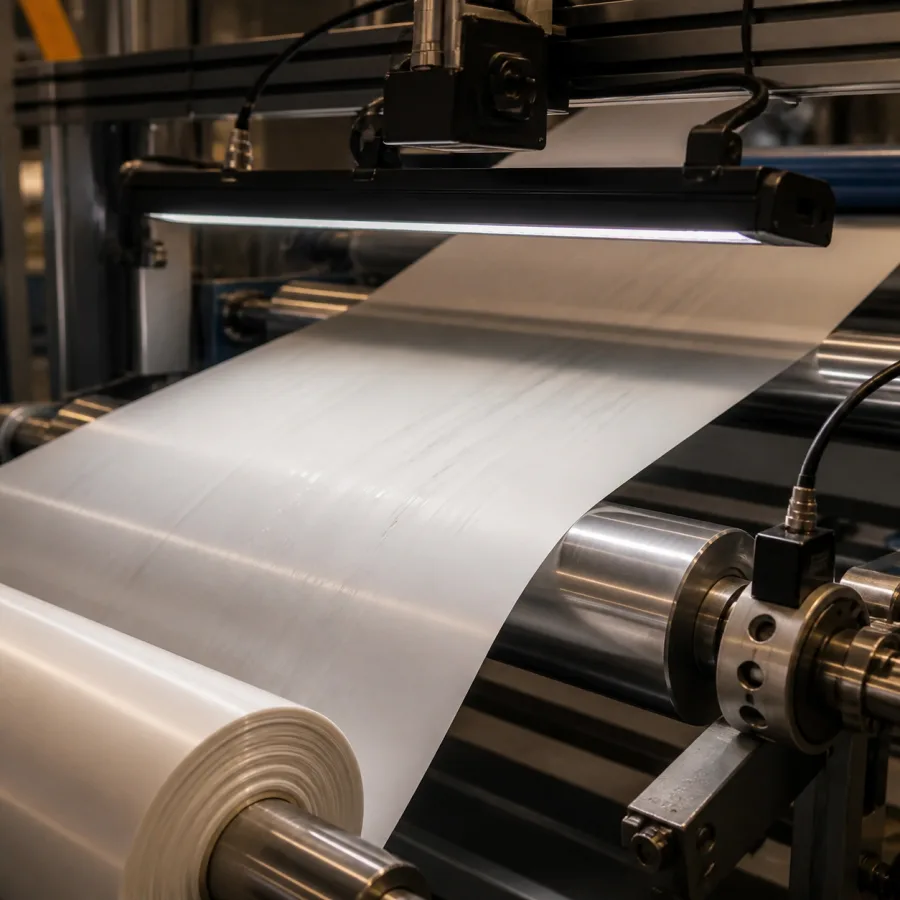 Roll materials
one hundred percent of the length instead of sampling
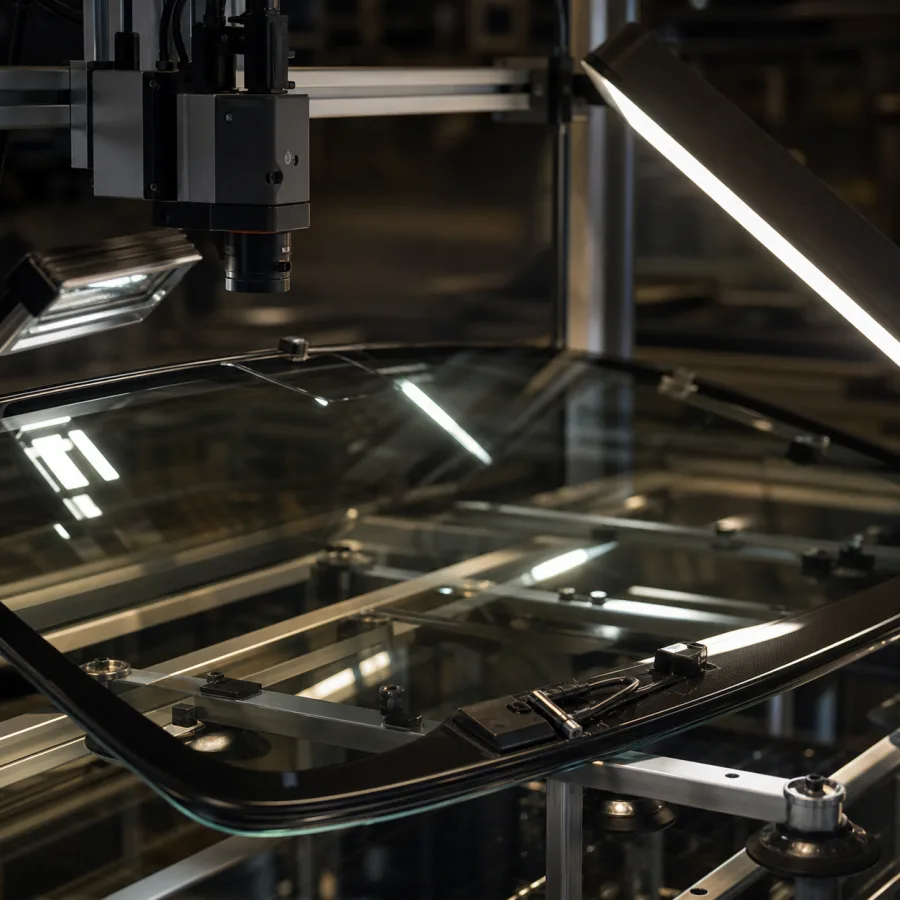 Auto glass
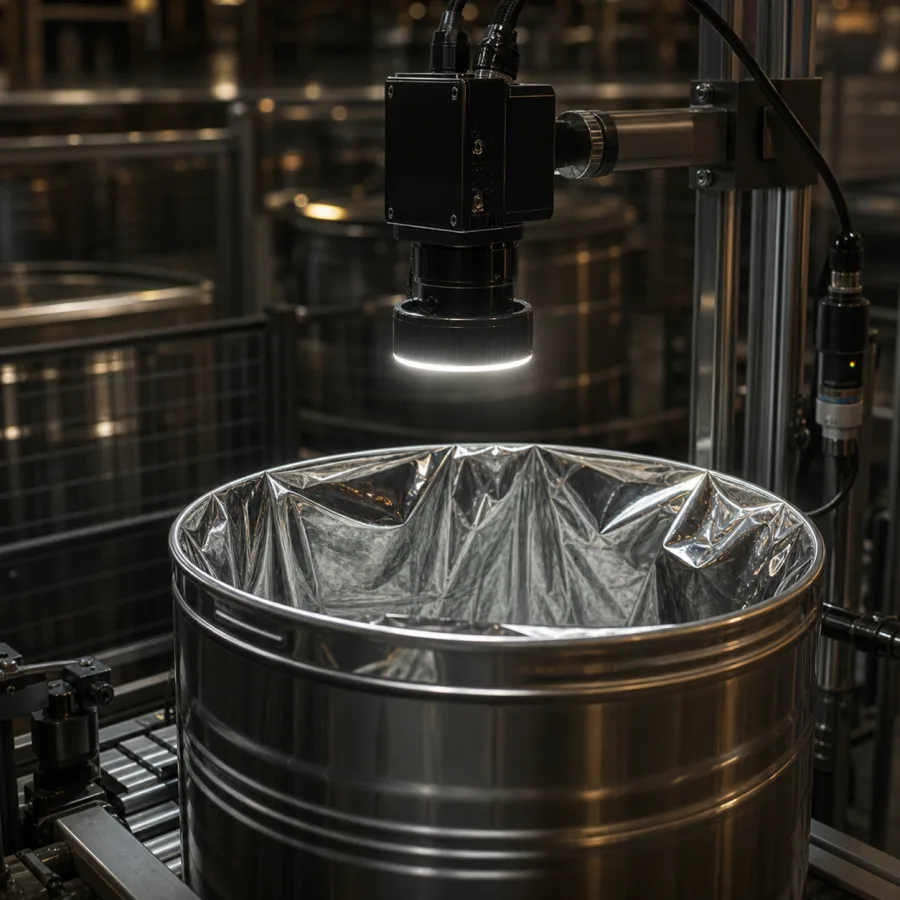 Metalworking
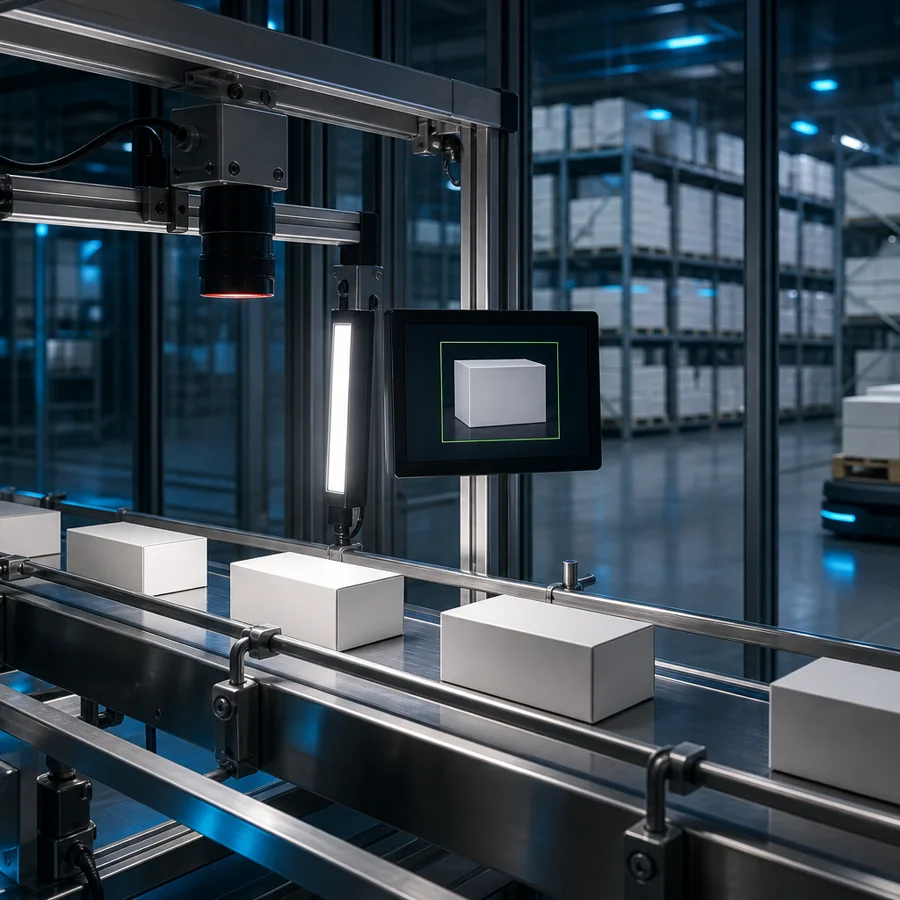 Pharma
Food production
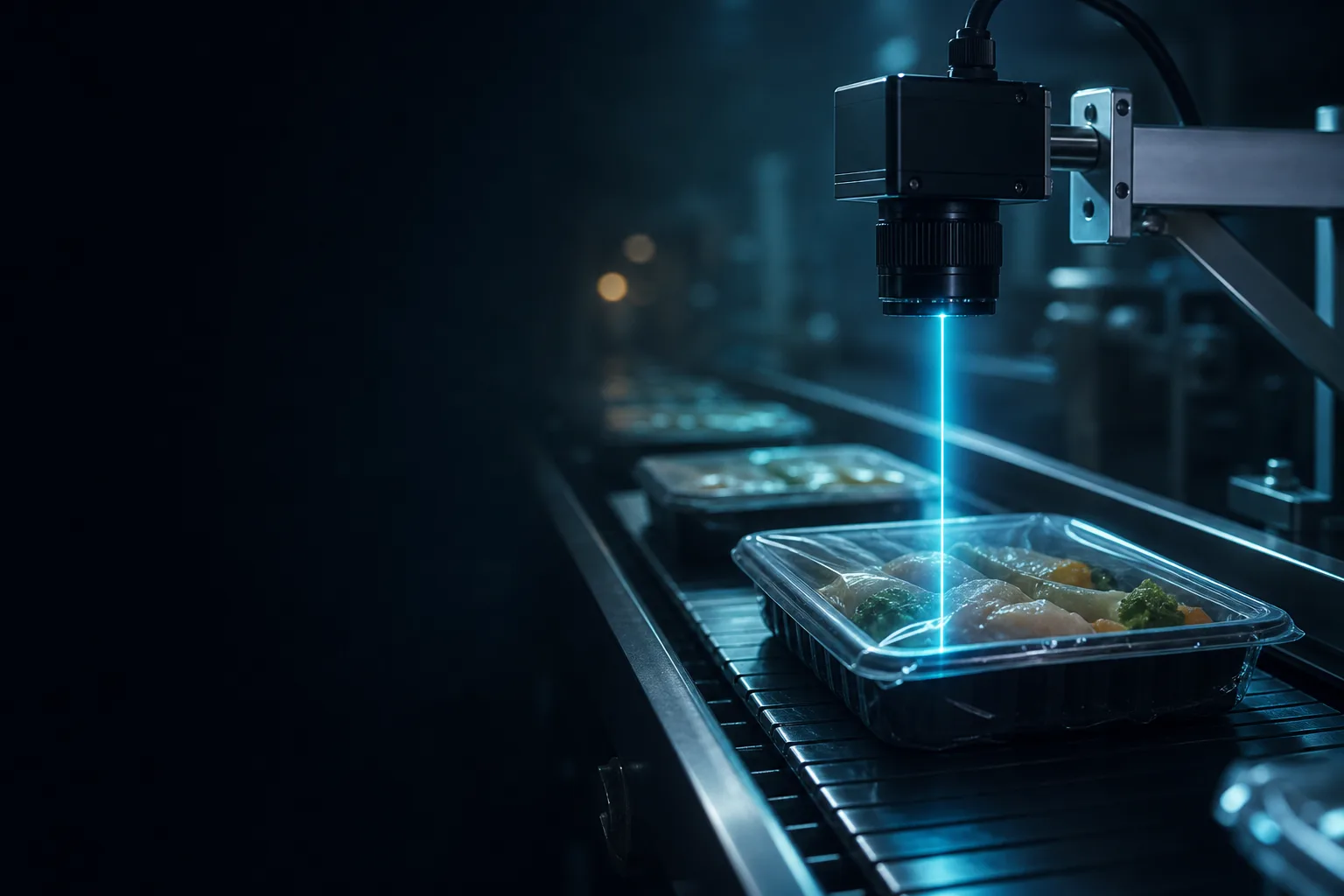
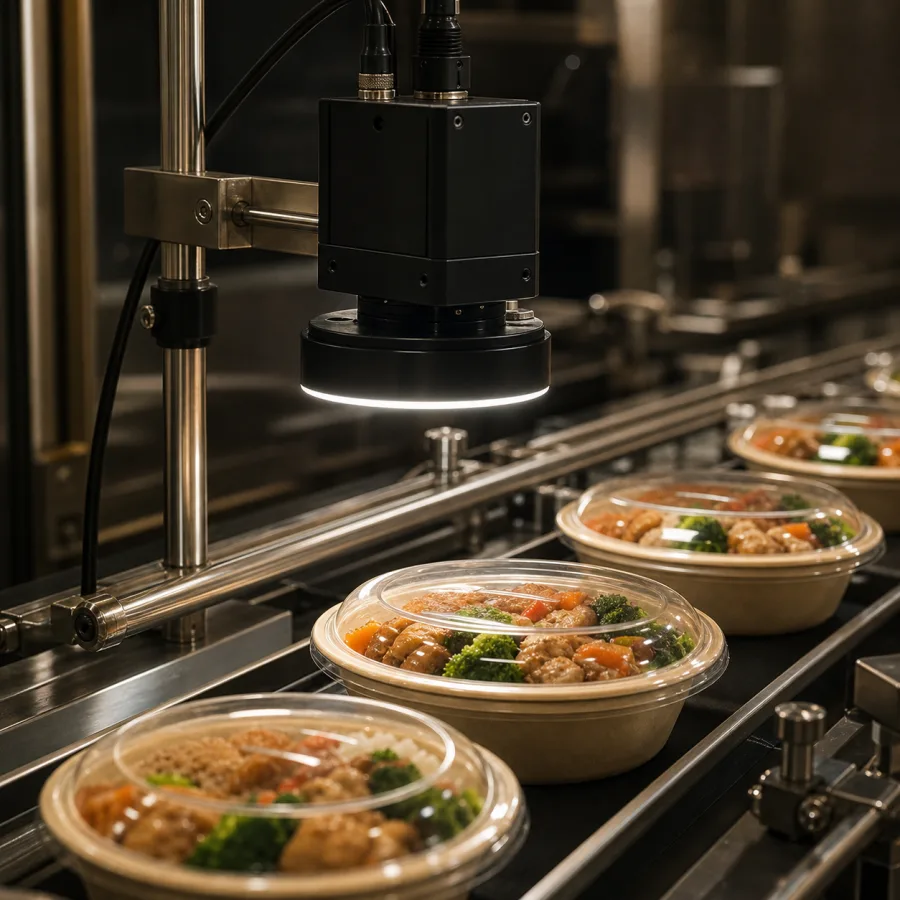
A ready-meal tray is only as reliable as its seal. A few millimeters of film skew, or an edge that isn't fully pressed, and the meal loses its seal inside the shipping case. And it's rarely your inspector who finds it — it's the retail chain, and what comes back isn't one tray, it's the whole batch. Eyes are a poor tool here: the tray rim reflects light, and hundreds of trays pass the operator every shift.
A smart camera with a ring light over the sealing section. We tuned the light so the glare started working for us: a good seal reads in the frame as one continuous line, while a skew or an incomplete press breaks that line — and the camera sees it instantly. Special attention goes to the tray edges, where the film shifts most often.
The camera catches over 98% of defective trays — a figure from commissioning on a real line, not a promise from a catalog. Rejects are pulled before case packing, and unsealed meals stopped traveling to stores. The operator no longer stares at every tray — they respond when the system calls.
| Task | film skew and under-pressed tray edge |
|---|---|
| Environment | wet zone of a food plant, production line speed |
| Setup | smart camera, lens, ring light, operator screen |
| Reaction | operator alert before case packing |
| Budget | from $2,600 (entry-level station) |
Evaluate my application the same way
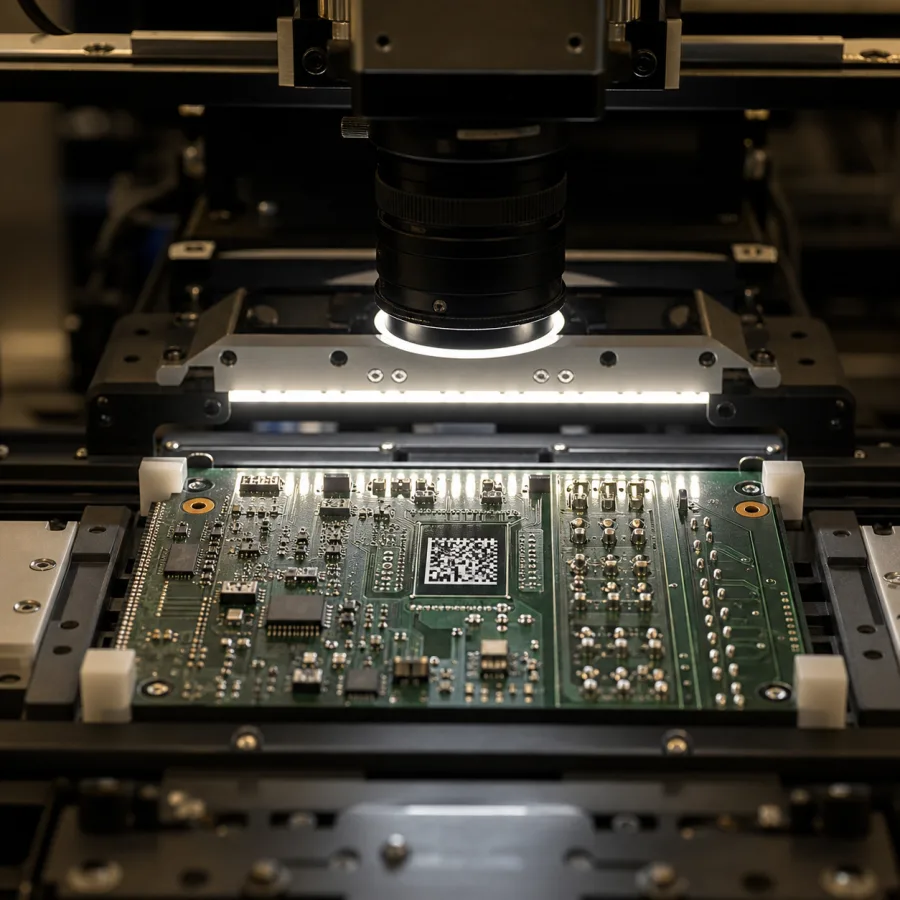
Electronics
Two separate problems kept getting lumped together: unreadable DataMatrix marks and solder defects from 0.15 mm. Because one manual check handled both, the data couldn't answer the main question: what needs adjusting — the marking process or the reflow oven?
Two separate checks instead of one general one. A code reader verifies the marking, and a high-resolution camera with its own lighting checks the solder. Each problem got its own counter.
Marking errors no longer mix with solder rejects. It became clear which operation produces the defect — and the statistics turned from a bad-board counter into a working tool: now you know exactly what to tune.
| Task | DataMatrix codes + solder defects from 0.15 mm |
|---|---|
| Environment | electronics production, stable light |
| Setup | code reader, 12 MP camera, lighting |
| Budget | from $1,600 |
Evaluate my application the same way
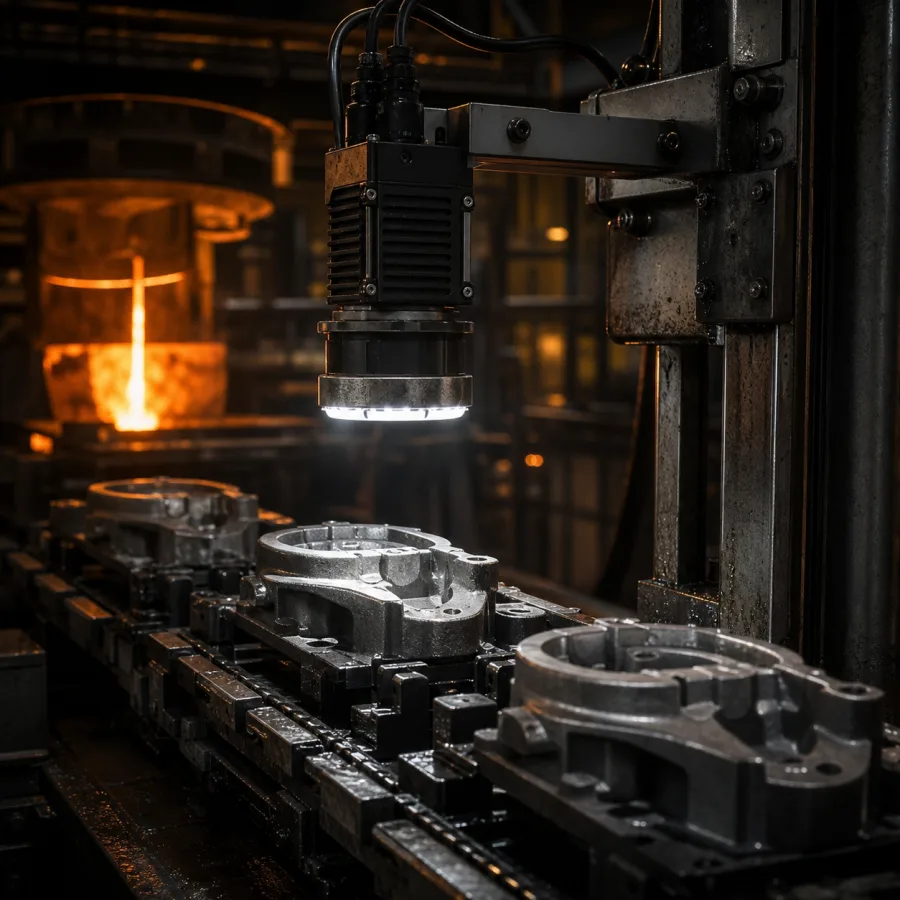
Foundry
Edge chips, misruns, form defects. On a dark, rough casting the eye tires within an hour, and foundry dust and heat are hard on people and standard equipment alike. So defective castings were reaching machining — and the reject was found only after machine time had already been spent on it.
A camera in a protective housing with hard directed lighting — under that light, the casting's relief and its defects throw contrasty, clearly readable shadows. Each part type has its own inspection zones configured: part changed — your line lead picks another program from the list.
A defective casting is screened out before machining, and machine time is no longer wasted on known rejects. And defect-type statistics show the foundry which mold is starting to "shed" — before it turns into a batch of scrap.
| Task | edge chips, misruns, casting form defects |
|---|---|
| Environment | foundry: dust and heat — camera in a housing |
| Setup | camera, hard directed light, protective housing, screen |
| Budget | from $4,400 |
Evaluate my application the same way
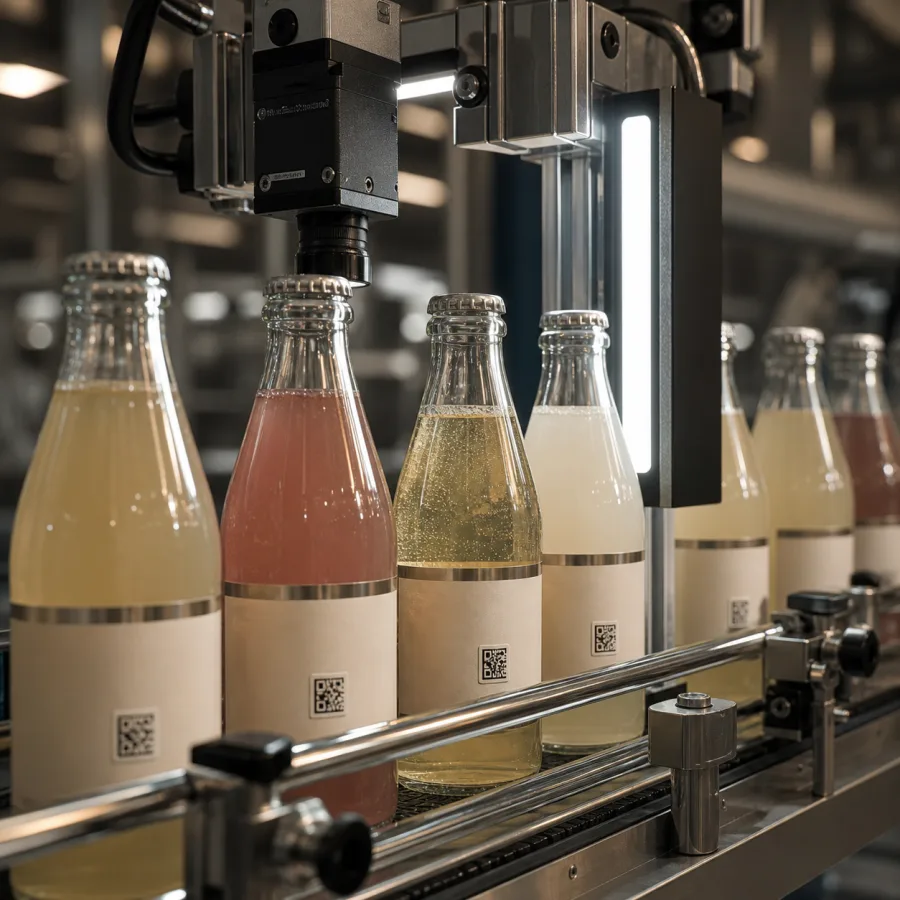
Beverages
The bottling line needed three checks at the same point: fill level, label alignment, and the serialized DataMatrix code. Reflective glass and high speed make manual checking impractical. And each failure has its own cost: underfill means retail claims, a skewed label ruins shelf presentation, an unreadable code is a traceability compliance risk.
One inspection station instead of three. A monochrome camera with polarizing filters that kill the glass glare, plus a code reader — level, label and code are checked in a single pass of the bottle.
Over 99% of underfills are caught before packing. The same point checks the label and the code along the way — no second station, no second budget.
| Task | underfill + label + serialized code at one point |
|---|---|
| Environment | bottling: glass, glare, moisture |
| Setup | monochrome camera, polarizing filters, code reader, line link |
| Budget | from $6,800 |
Evaluate my application the same way
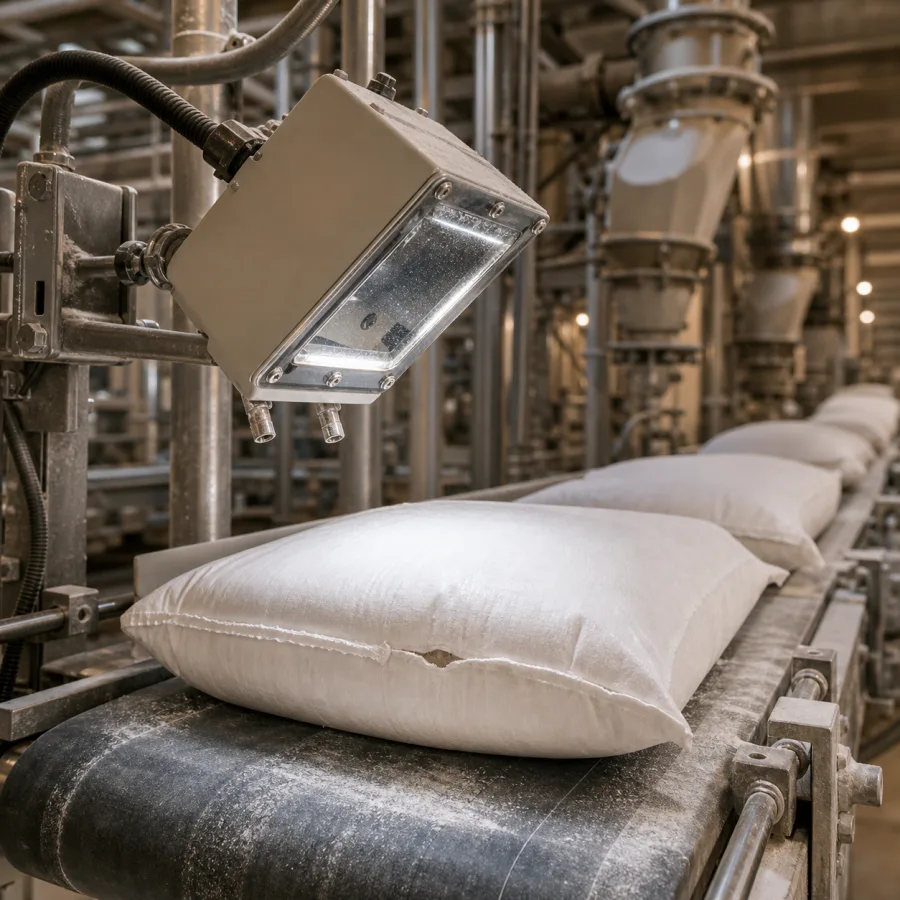
Flour mill
A white bag, white flour, flour dust in the air — the worst possible case for "just install a camera". A tear in a bag against a white background is invisible to a person after the tenth bag, and to a camera on factory defaults. And a torn bag means spillage down the whole chain, all the way to the customer.
A camera in a housing with constant air purge: the airflow simply never lets dust settle on the optics. And we matched the lighting to the bag's texture — at the right angle a tear throws a shadow that is visible even on white.
The camera catches over 97% of tears — in a zone where the received wisdom was "vision won't work here". We show this case to everyone who is sure their conditions are too hard.
| Task | tears in a white bag |
|---|---|
| Environment | flour dust — housing with optics air purge |
| Setup | smart camera, matched lighting scheme, housing, air purge |
| Budget | from $3,600 |
Evaluate my application the same way
Roll materials
A defect on the web — a scratch or a hole from 0.2 mm — hides in hundreds of meters of roll. Sampling-based inspection meant exactly one thing: sometimes the customer received a roll with a defect in the middle, and the claim came back for the whole batch.
A line-scan camera: it captures the web line by line, like an office scanner captures a page — only at production speed. The result is a continuous scan of the full width and full length of the roll, without a single missed metre.
One hundred percent of the web is inspected instead of a sample. The defect is known to the metre of the roll — you can cut out one section instead of scrapping the whole batch.
| Task | scratches and holes from 0.2 mm on the web |
|---|---|
| Format | continuous web, inspection at production speed |
| Setup | line-scan camera, web travel sensor, line light, industrial PC |
| Budget | from $1,800 |
Evaluate my application the same way
Automotive
Glass reflects the entire shop at once, and what you need to inspect on it are specific elements: silk-screen print, sensors, brackets. The second headache is the product range: there are dozens of glass models, and a setup tuned for one fell apart on the next.
Monochrome cameras with polarizing filters and angled lighting — the light geometry steers reflections away from the lens. And each glass model has its own "recipe" stored in the system — a ready set of inspection settings. New model on the conveyor — the operator picks the recipe from the list, done.
Element positions are inspected without constant re-tuning. A new glass model is a new recipe in the library, not a service call.
| Task | element positions on glaring glass |
|---|---|
| Specifics | dozens of models — each with its own settings recipe |
| Setup | monochrome cameras, polarizing filters, angled lighting, recipe library |
| Budget | from $21,000 |
Evaluate my application the same way
Metalworking
A foil liner sits on the rim of a steel drum. If it shifts or comes off, there will be no seal — and the next operation closes that spot so the defect can never be found again. Meanwhile foil on metal gives a double glare — the eye can barely make out the liner's edge.
A camera with a polarizing filter. We chose the lighting scheme not from a catalog but by testing on the customer's actual drums — this project explains better than any words why we ask for samples before naming a price.
A shifted liner stops the section or calls the operator before the next operation. Rejects stopped hiding inside finished drums.
| Task | foil liner inspection on a drum rim |
|---|---|
| Specifics | double glare (foil on metal) — solved by tuning light on samples |
| Setup | smart camera, polarizing filter |
| Budget | from $4,200 |
Evaluate my application the same way
Pharma
Serialization — separate, visual inspection — separate, warehouse — separate: three systems, three contractors, and data gaps at every joint. When something went wrong, finding the answer to "where did we lose the batch" took longer than packing that batch had.
One project replaced three: cameras and readers on the line, integration with the ERP/WMS, and AMRs moving materials between areas. Batch data flows in one continuous stream — from code printing to the warehouse cell.
The batch is traceable end to end: through the line, case packing and warehousing — with one contractor owning the complete workflow instead of three.
| Task | tie serialization, inspection and warehouse into one loop |
|---|---|
| Setup | cameras, code readers, ERP/warehouse link, mobile robots |
| Integration | end-to-end: line → records → warehouse |
| Budget | from $15,500 |
Evaluate my application the same way
TEST YOURSELF
Three frames from production lines, one defect in each. You have as much time as you like. The line operator has about three seconds per part.
Three frames from production lines, one defect in each. You have as much time as you like. The line operator has about three seconds per part.
Camera: 3 out of 3. This isn't about how well you looked — the difference is that the camera inspects every part, all shift long, with the same attention to the first one and the ten-thousandth.
Is your defect trickier than these three? That's exactly what the free test is for.
demo frames; 40 ms is a typical smart-camera cycle time on a pass/fail task
The camera checks each frame in 0.04 seconds. Let’s see how fast you can spot the defect — three real production frames.
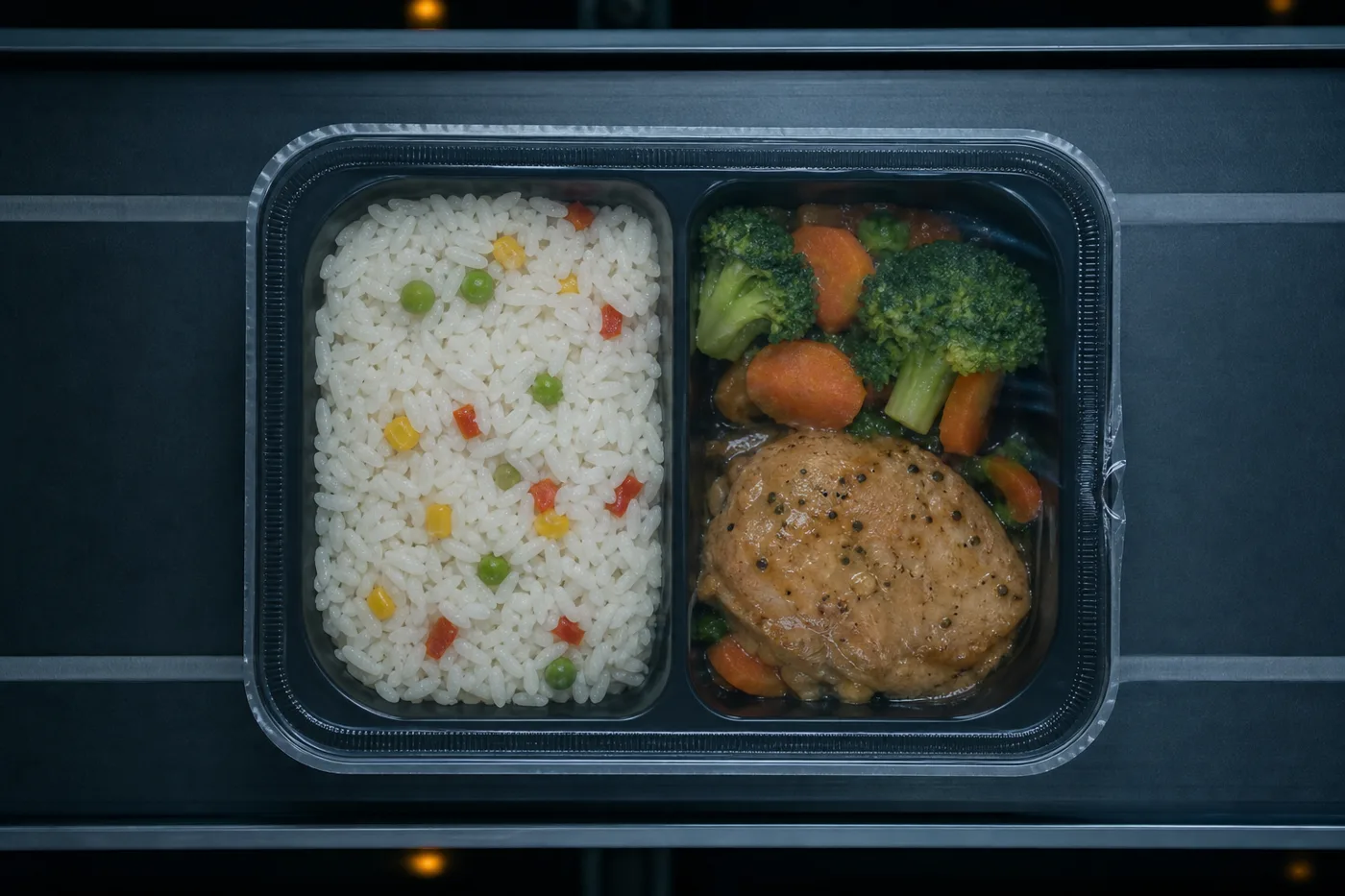
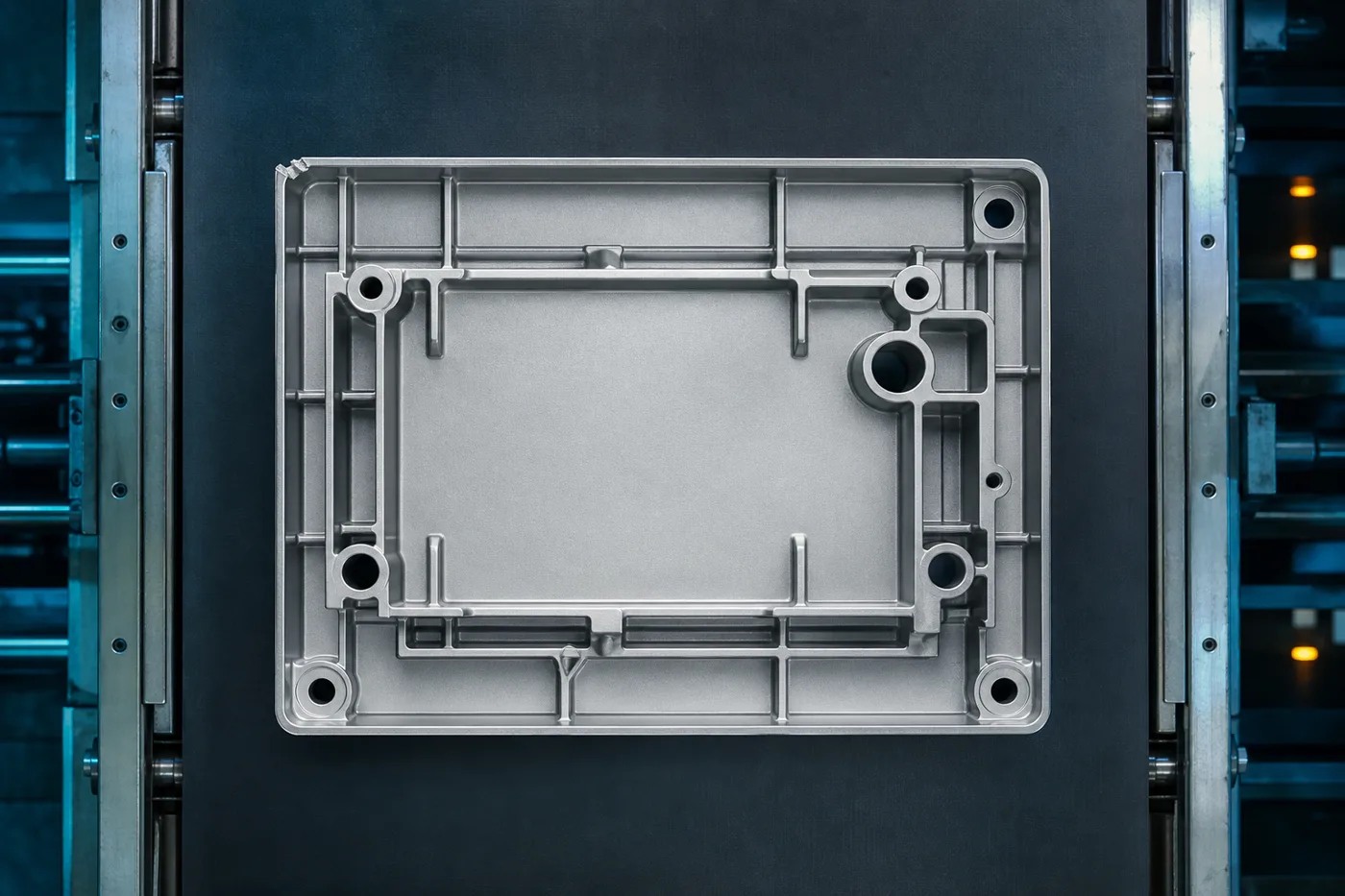
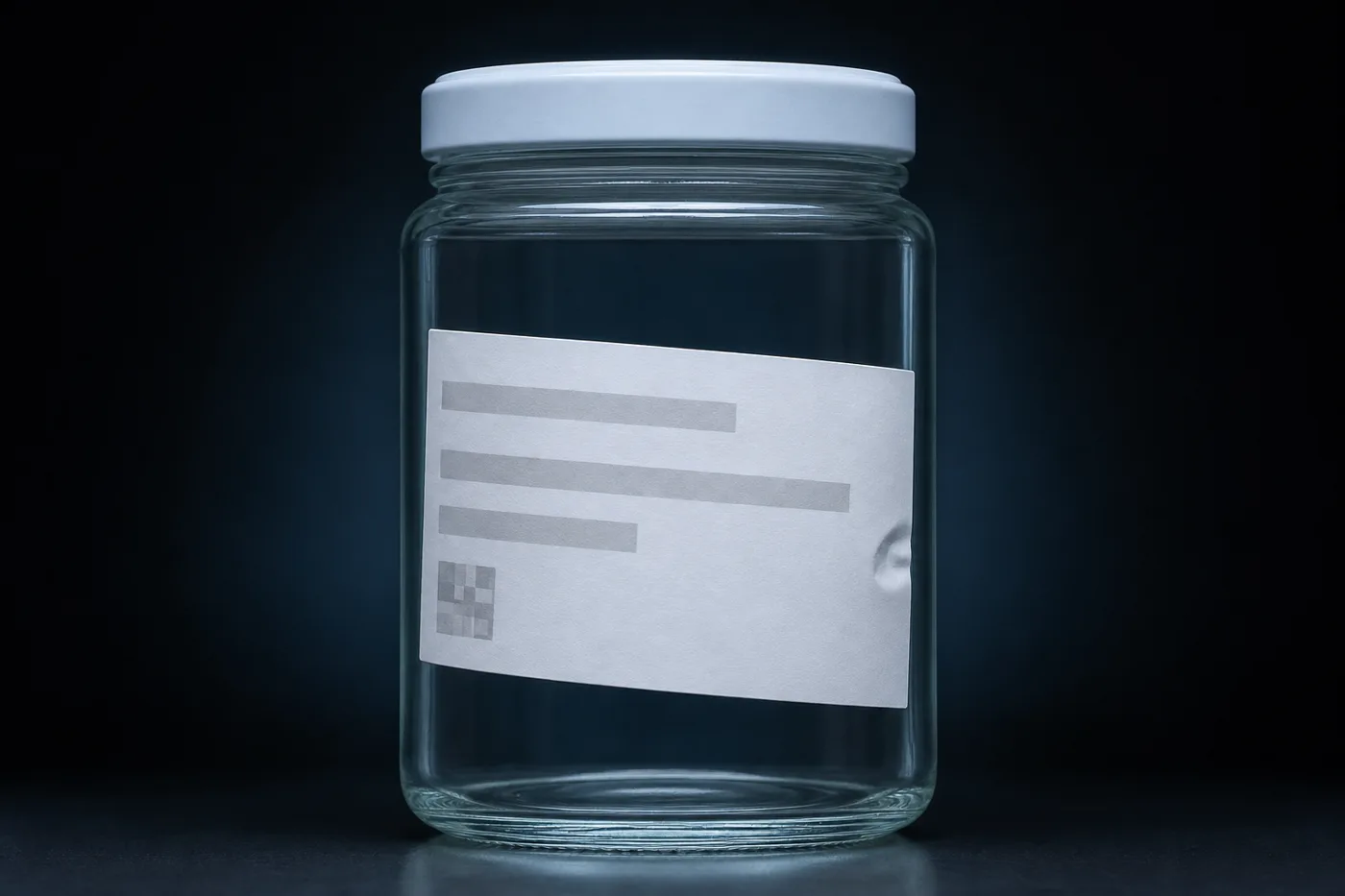
Camera: 3 out of 3. This isn't about how well you looked — the difference is that the camera inspects every part, all shift long, with the same attention to the first one and the ten-thousandth.
Is your defect trickier than these three? That's exactly what the free test is for.
demo frames; 40 ms is a typical smart-camera cycle time on a pass/fail task
FREE TEST ON YOUR SAMPLES
You hand over a box of samples — or, to start, just photos of good and defective parts. In 2–3 business days you're holding five deliverables you can take straight to management:
your product on our bench. It answers the key question: can the system detect the defect?
feasibility, equipment, what goes into the station and roughly what it costs. Written so the page can go straight to management as-is.
no meaningless open-ended ranges: a specific bill of materials and entry-level figures.
what to check on your side before installation, so you don't pay for downtime.
a handy list for vetting everyone, including us.
a preliminary verdict is available from a photo of the defect via messenger
How it works: you send samples, we run them on the bench and return the video, the report and the quote. It takes 2–3 business days after the samples arrive; we'll confirm the nearest free test slot in the first reply.
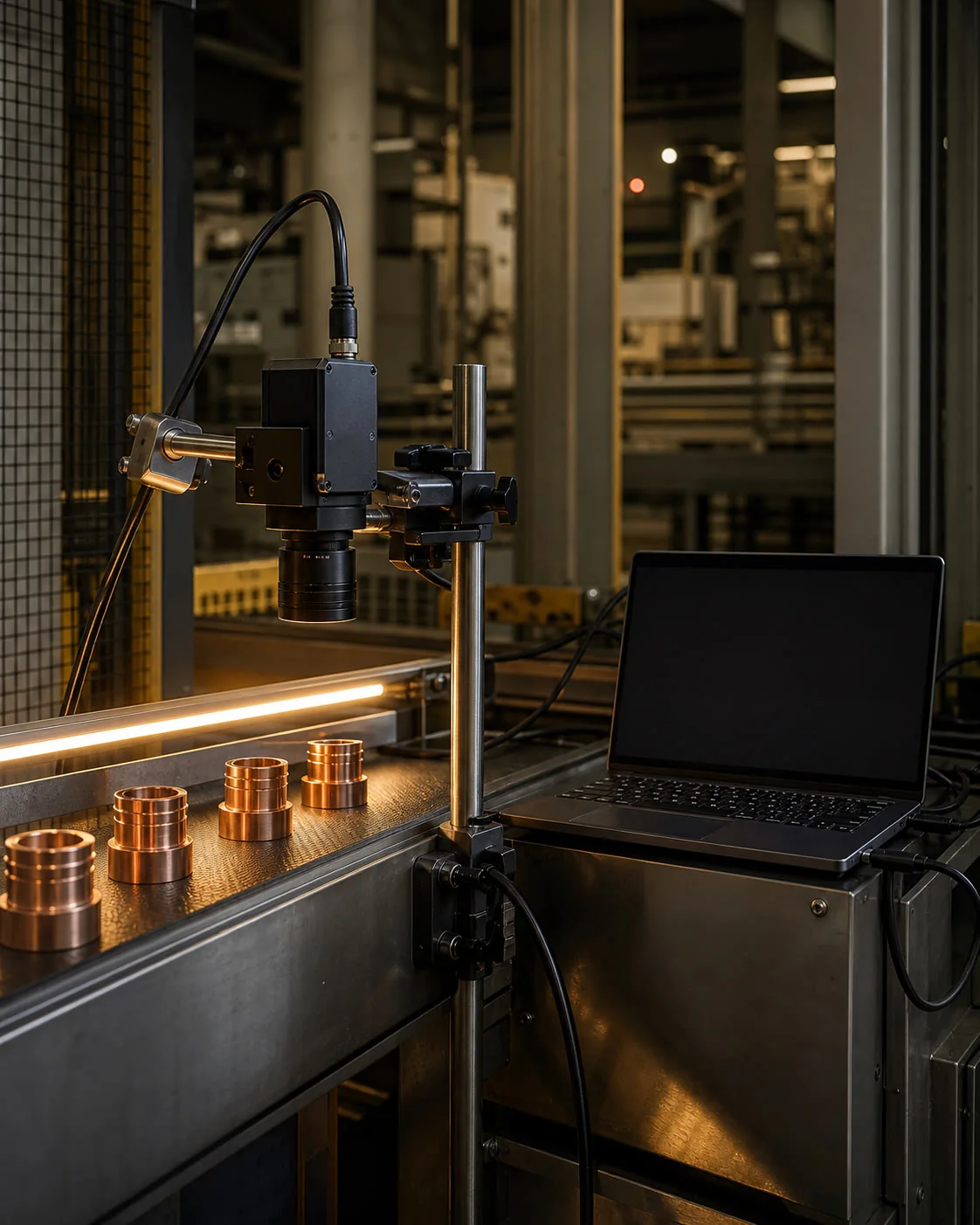
We break every task down along these six points — and the same six show right away which one will be hard. Hard doesn't mean unsolvable. It means: test first, money later.
The camera has to keep up with your line — not the line wait for the camera. So we pick the camera and light for your real speed: the shot takes milliseconds, and the verdict on a part is ready before the next one arrives.
Glare is inspection's main enemy and its tool at the same time. You can kill it with filters — or aim it so it highlights the defect itself, like in the steel drum case. Shop lighting plays no role here: the station brings its own light.
For wet and dusty zones the camera gets a protective housing, the optics get an air purge, and food-grade sanitary requirements are built into the design from the start — not "we'll figure something out later".
Real parts always differ slightly, and the camera has to tell that normal variation from a defect. That's the first thing we verify in the test.
How strict the inspection is — that's your call. A tighter threshold means more caution and more false rejects; a softer one means a higher risk of letting a defect through. We show what each option gives, and the final word stays with your QC.
The camera can call the operator, stop the section, or remove the defective part from the line itself — whichever way your plant works.
when it's hard: weak defect contrast at high speed · transparent media · a defect inside the part — in those cases it's test first, money later
The price depends on the task, so there are three levels. Each shows its actual bill of materials — you can see what you're paying for.
A smart camera, lighting and an operator screen. The camera finds and shows the defect; the decision stays with a person.
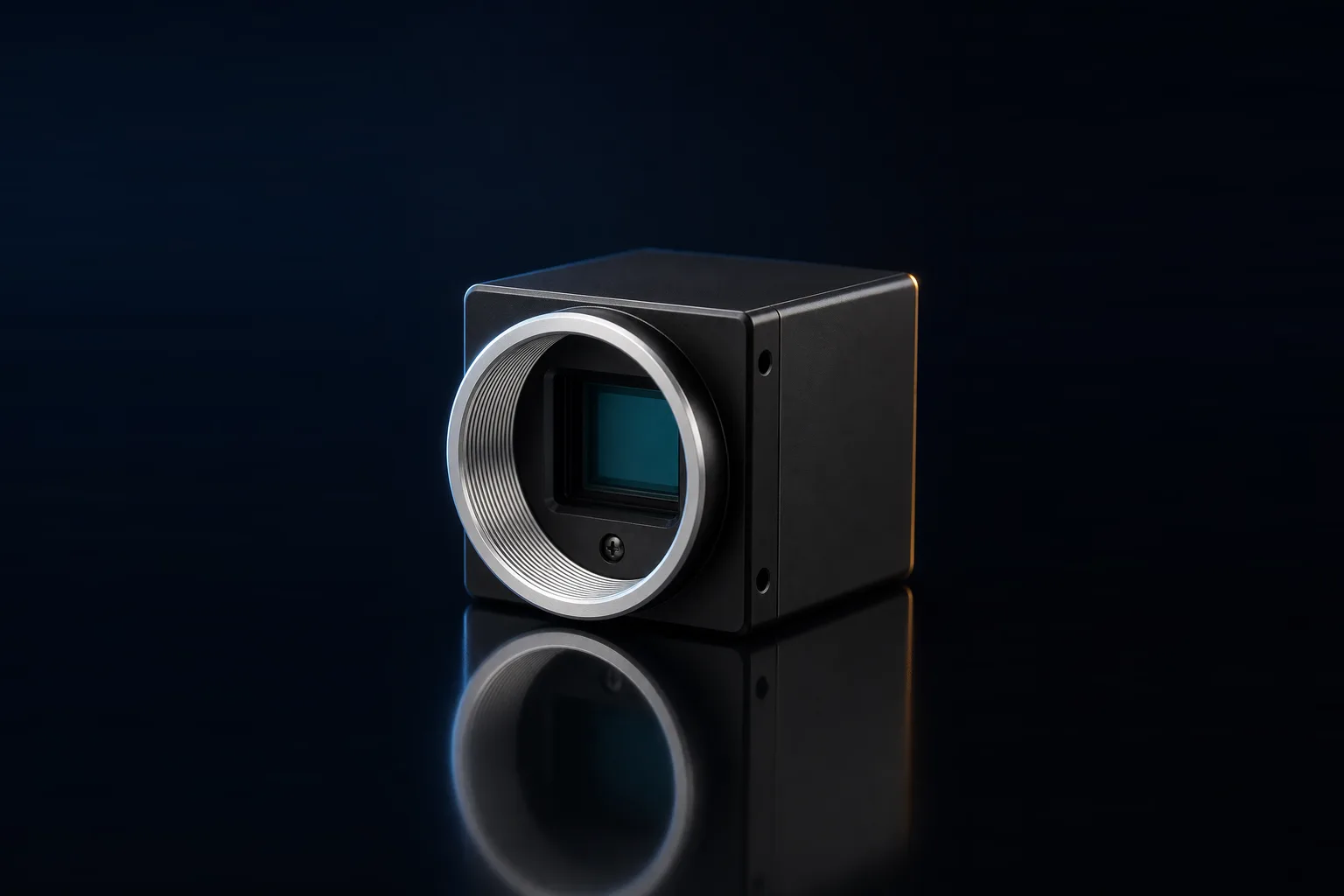
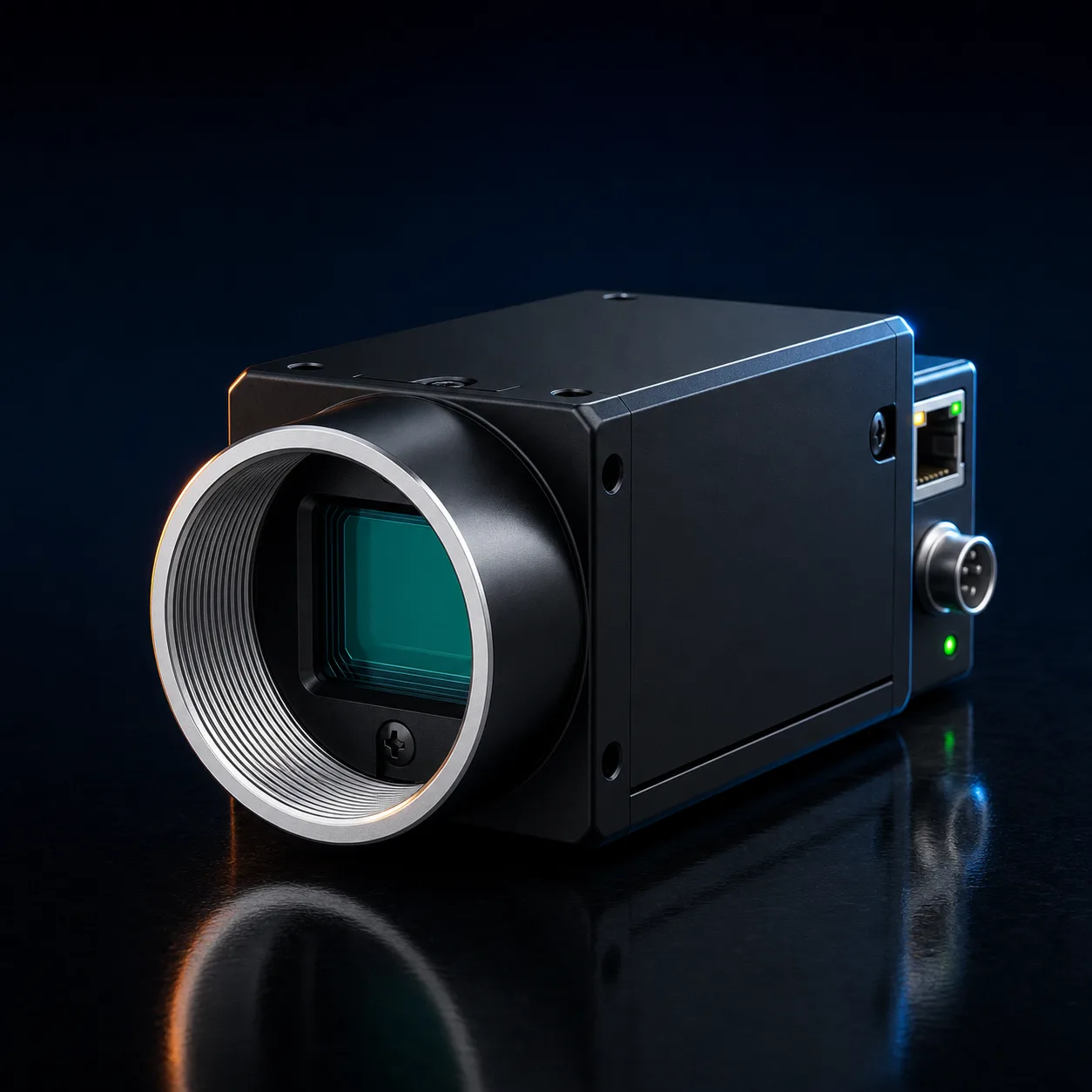
MV-SC6050C smart camera — shoots on its own, decides on its own, sends the signal on its own: it needs no industrial PC. Device price guide: ~$1,400–1,800.
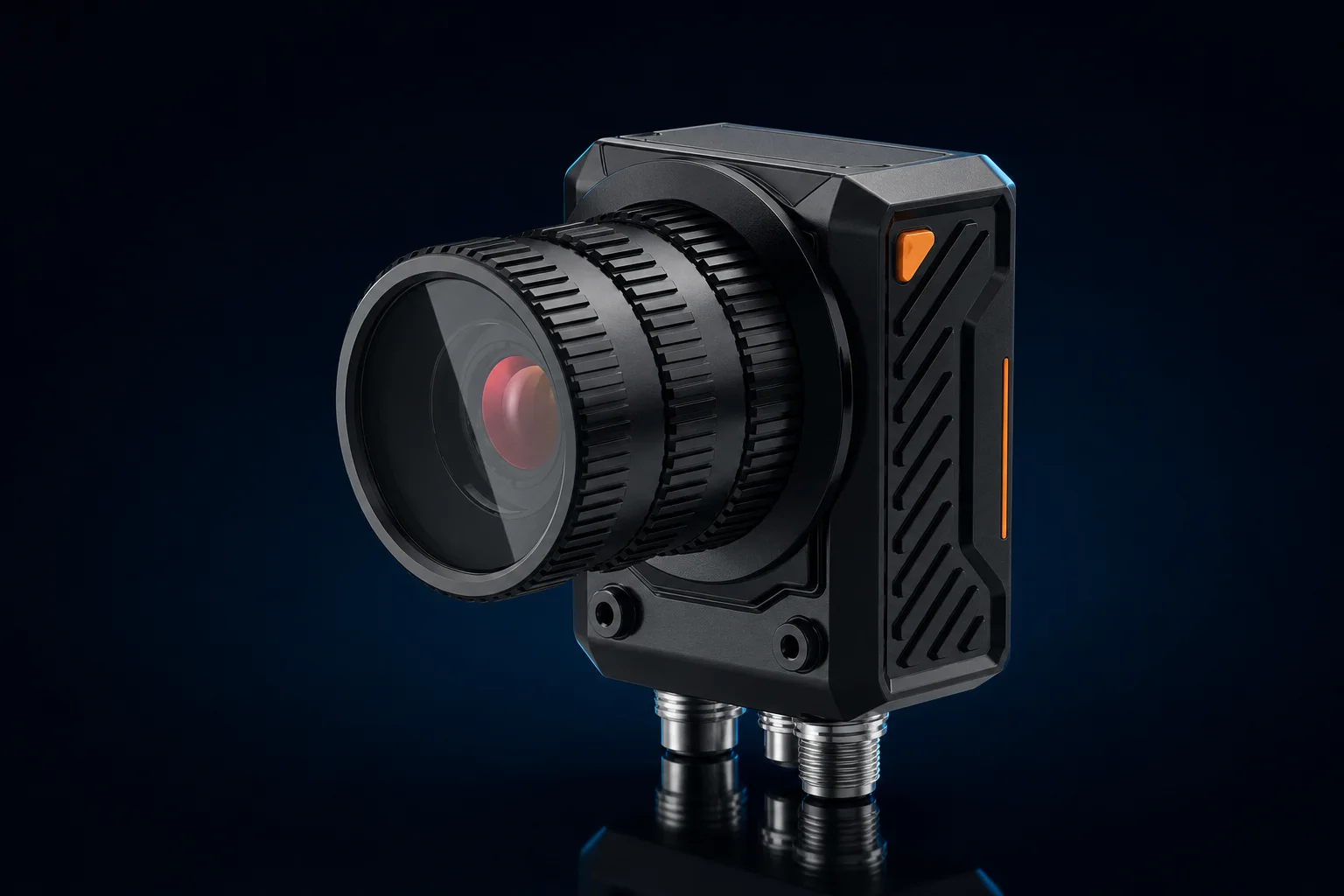
a live frame of the part, the inspection zone overlaid, the pass/fail verdict and the time it took.
Camera, lighting, controller and a reject mechanism. Good parts travel on, rejects leave the line on their own — the operator only deals with what's been pulled. This is the level of the "ready meals" and "foundry" cases.
MV-CH120-60UC camera (12 MP) + MV-LRSS-H shadowless light — at high resolution a small defect has nowhere to hide, and the right light stops glare and shadows from posing as defects. Guide: camera ~$450–650, light ~$100–160.
Because you're not buying a camera — you're buying a working station: optics, controller, installation and tuning for your product.
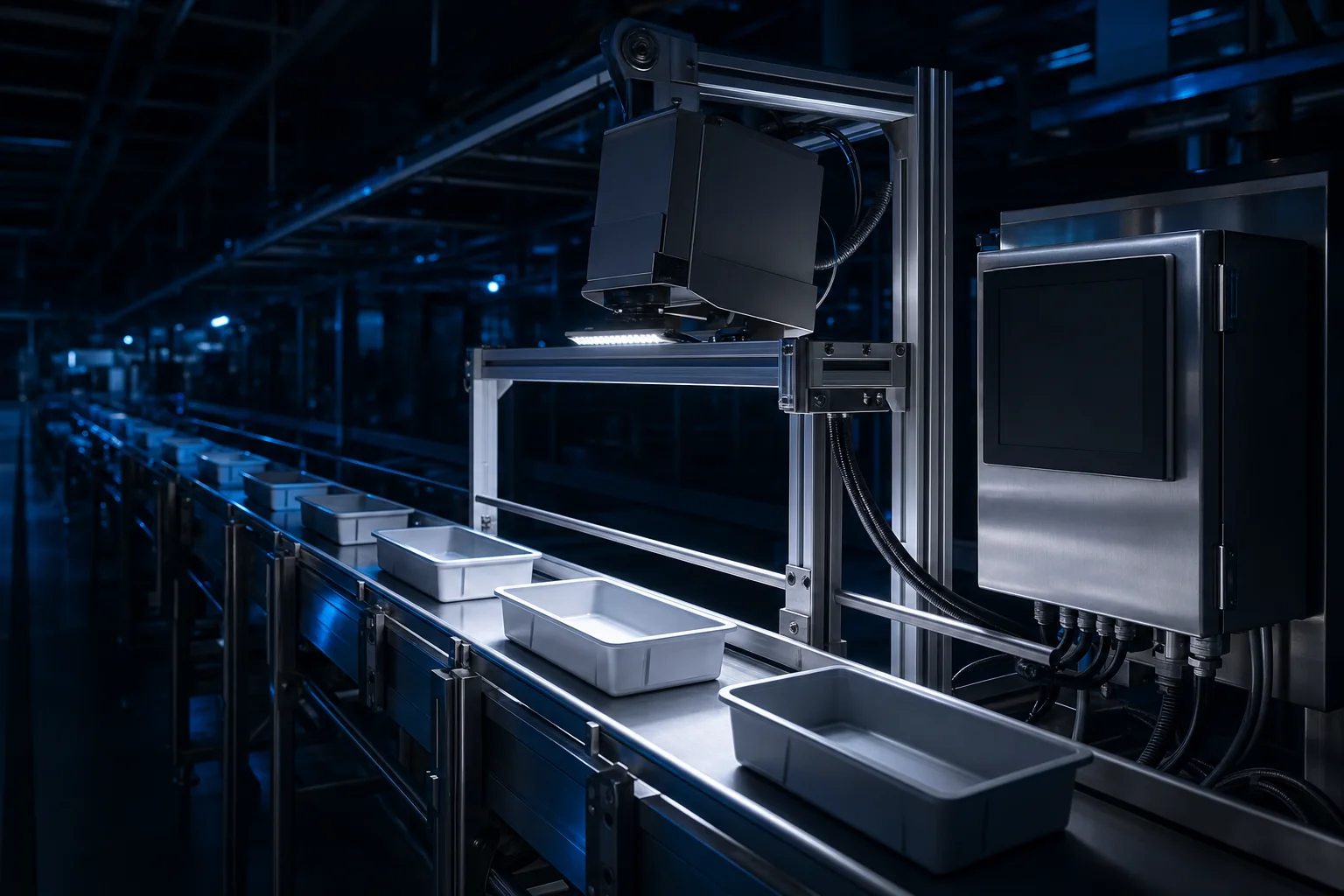
Several lines or high speed, a frame archive for every part, per-shift statistics. This is the level of the "pharma: line + warehouse" case. For roll materials the MV-CL084 line-scan camera works here — the one from the roll case: it captures the web as a continuous ribbon, line by line, like a scanner captures a page.
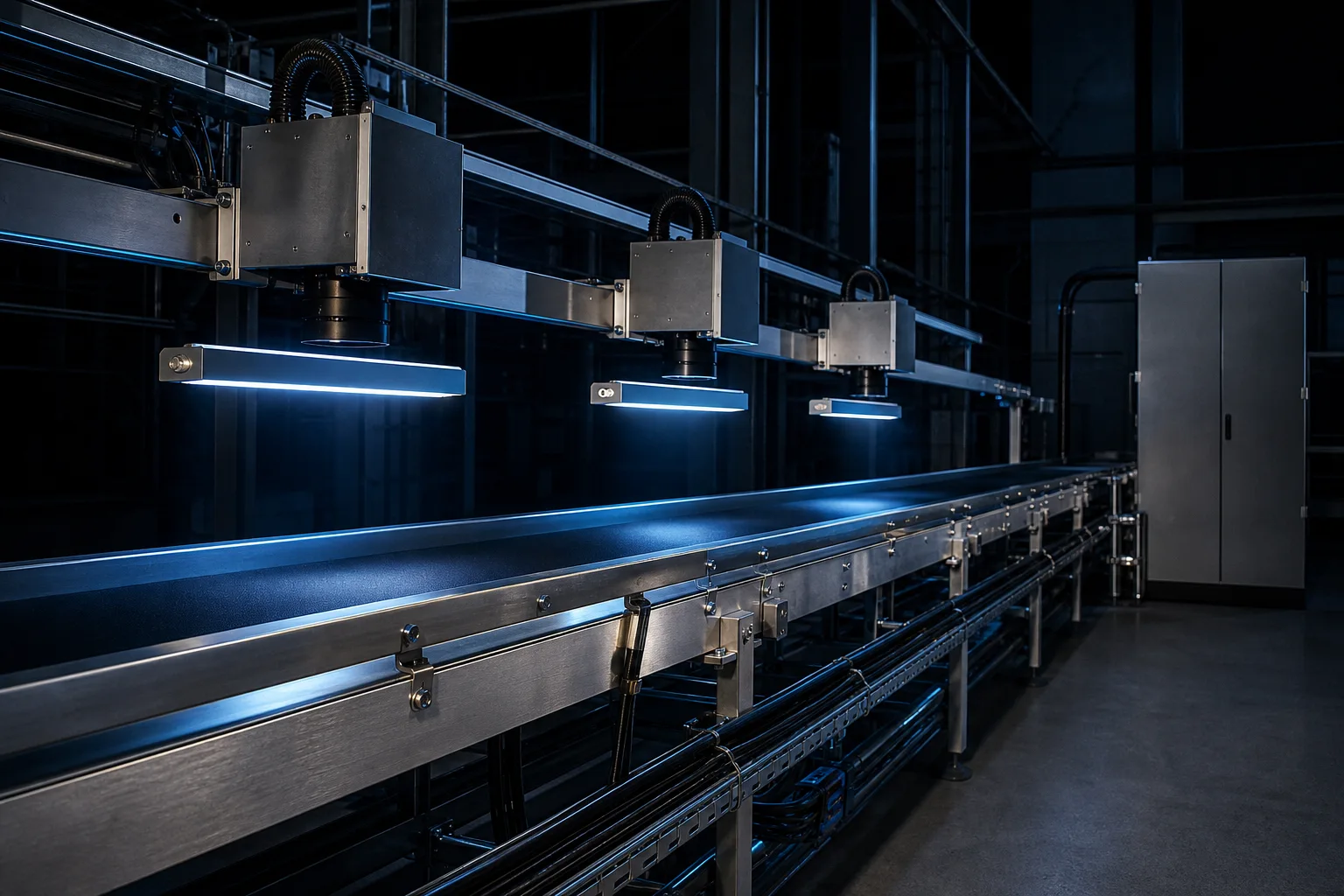
you're buying a working station, not a box with a part number.
Exact figures depend on the task — so the preliminary quote takes 1 day, and the precise one comes after the test. Both documents are free.
Screen 8 · catalog-models
Click a model to open its card with specs right here, on top of the page.
Start with photos of good and defective parts. If a bench test is needed, we'll confirm the sample quantity, shipping address, courier and customs details before you dispatch anything.
We run the samples on the bench and return the test video, the engineering report and a preliminary quote. It takes 2–3 business days after the samples arrive.
The equipment runs at your site — at real speed, on real parts. This is where we tune inspection strictness together with your QC. The “it worked on the demo, but will it work here?” concern gets resolved exactly at this step — before you buy.
Installation, commissioning, training for your shift. We wire the station into the line and your systems — from the operator alert to the ERP record.
selection and supply, light and optics, tuning for your product, training your people, warranty and spare parts.
from supplying a camera to launching a turnkey station.
equipment ships straight from the Hikrobot factory; stock items arrive in about two weeks by air.
the person who ran your test is the person who commissions your station.
we bench-test first, then support your site team or local integrator with remote tuning and training.
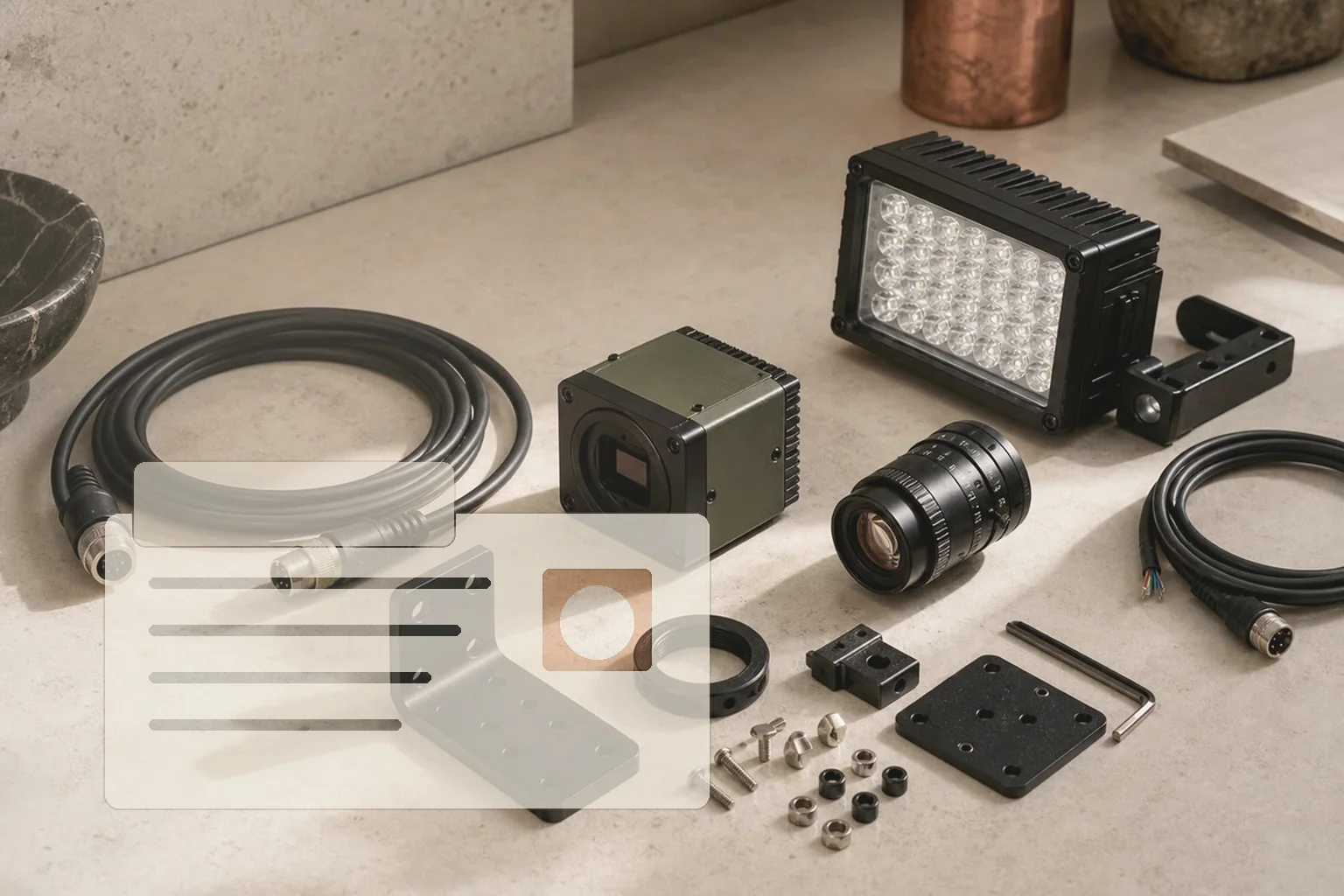
We test production samples under a camera, record the run, and send an engineer’s report. Free, in 2–3 business days.
The test takes 2–3 business days after the samples reach us. Send a few good parts and a few defective ones. If shipping samples is a hassle right now, we'll start from photos and give a preliminary verdict from them.
Then the report will say "not solvable with a camera" or "solvable, but costs more than the problem" — with the reasoning why. You save the budget; we save the time on a project that would have ended in mutual disappointment.
That's tuned during the pilot together with your QC. A tighter threshold — more caution; a softer one — more risk. Where to draw the line is your decision; we show what each option gives.
No. Product variants live in the system as ready "recipes", and your line lead can switch between them — we teach that at launch. Our visit is only needed when a genuinely new task appears.
Popular cameras, lights and readers are factory stock: for in-stock items, about two weeks by air is typical. Rare items are made to order, and then the date is fixed in the quote. The exact timing for your bill of materials will be in the preliminary quote — it takes 1 day.
A vision engineer. Not a sales team, not a script. And if you chose "message me" — we'll message, not call.
Not for the test: it runs at our bench, on your samples. For the pilot we fit the installation into your maintenance window — scheduled around production.
Send samples or photos — we'll return the test video, the engineering report, a preliminary quote and both checklists. Within 2–3 business days after the samples arrive. If a camera can't solve the task, you'll be the first to know — for free.
2 minutes to applyan engineer replies within 4 business hoursyour number is never shared